

Cloud computing has steadily become popular across businesses. The flexibility in computing and data storage, and the cost-effective ways to manage data also make cloud computing valuable. As cloud computing resources become available and computing is done remotely, businesses must learn to access, manage, and control computing infrastructure, and determine the cost more efficiently. In this review, we access cloud computing technology and cloud services in 2026 to help small and large businesses in cloud computing.
What is Cloud Computing?

Cloud computing enables businesses to use servers, storage, processing, and data management facilities over the internet, eliminating the need for data storage and processing to take place over personal servers and computing devices. Using cloud computing, companies can lease physical infrastructures whenever the need arises.
Some of the benefits of cloud computing include:
- Scalability: Organizations have the option to increase or decrease the business resources on demand.
- Cost-Effectiveness: companies are able to save money when using cloud services, increasing the cost-effectiveness. This eliminates the need to purchase expensive computing and processing hardware.
- Accessibility: Anyone can use cloud services from virtually any location, thus giving employees the options to work anywhere and allowing more global interactions.
Types of Cloud Services: IaaS, PaaS, and SaaS
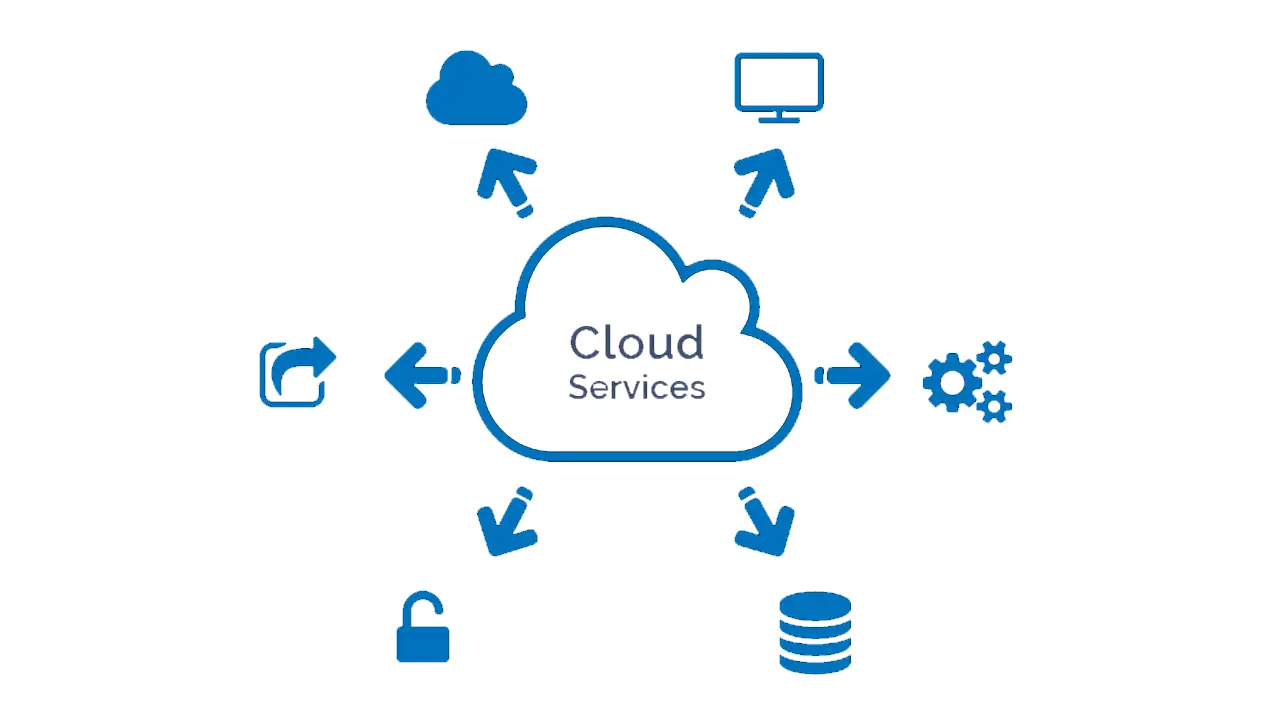
Generally, cloud services are offered under a unified model, which can be described as Infrastructure as a Service (IaaS), Platform as a Service (PaaS), and Software as a Service (SaaS). Let us consider each in turn:
1. Infrastructure as a Service (IaaS)
Having extensive resources in computing, IaaS can provide a business entity. They are also able to provide business organizations the opportunity to use virtual machines as well as provide storage and networking capabilities.
Examples of IaaS providers:
- Amazon Web Services (AWS)
- Microsoft Azure
- Google Cloud Platform (GCP)
2. Platform as a Service (PaaS)
Developers use PaaS to create applications. They can do so without having to worry about features that are outside their focus, such as the supporting systems that are needed to keep a platform above the Infrastructure.
Examples of PaaS providers:
- Google App Engine
- Microsoft Azure App Services
- Heroku
3. Software as a Service (SaaS)
Asking the user to install Software SaaS will not. Business entities are free from maintaining software on local devices or their own servers. SaaS provider’s application will be completely managed, inclusive of application updates and securities.
Examples of SaaS providers:
- Google Workspace (formerly G Suite)
- Salesforce
- Slack
Cloud Infrastructure for Startups: How to Choose the Right Provider

Choosing the right cloud infrastructure provider is critical for both startups and large enterprises. Here are some factors to consider when making your decision:
1. Scalability and Flexibility
Since start-ups tend to grow quickly, having a cloud vendor that can provide scalable resources is critical. Be it increasing the cloud resources during peak times, or decreasing the resources for cost-saving, the right cloud solution will provide that flexibility and give you a way to only pay for the resources you use.
2. Cost-Effectiveness
While cloud computing can assist start-ups in reducing initial cash outlays due to technology infrastructure requirements, it is important to keep track of your cloud computing consumption, just as you would in any other utility. The cloud computing consumption should be monitored and managed, or else overspending can be an issue. Most cloud providers offer consumption estimators and built-in cost management tools to assist in that area.
AWS and Google Cloud are two providers that offer pay as you go pricing which is ideal for start-ups that may not have a large consumption of resources all the time.
3. Security and Compliance
Security and compliance have to be the first consideration when choosing a provider. Assess and gain a thorough understanding of the provider’s data protection policies and procedures, and verify its compliance with protection regulations such as GDPR and HIPAA.
Moreover, many startups work with sensitive data and the cloud provider’s security certifications act as a sign of meeting such standards.
4. Reliability and Uptime
Startups and big enterprises need to rely on cloud services. For that, the most reliable providers should be the ones with the highest uptime guarantees (99.9% and above). AWS and Microsoft Azure have a good reputation for uptime and reliability.
5. Customer Support
Startups need good customer support, especially during business-critical situations. Choose a cloud provider that offers around-the-clock support and has a strong track record of resolving issues promptly.
6. Integration with Existing Tools
Look at the cloud service’s integration capabilities with the software your startup uses. If your company uses Microsoft products, for example, Azure is probably a better option than AWS. For companies that have a subscription to Google services, Google Cloud
How Large Enterprises Can Leverage Cloud Computing
Cloud technology makes it easier for big firms to manage complex infrastructures, manage data, and collaborate. The following are the benefits of cloud technology for large firms:
1. Centralized Data Management
Cloud technology gives large firms the ability to streamline their data and manage it better. This makes it easier for the firm to manage data, and departments to collaborate, while gaining better analytics and insights from the data.
2. Disaster Recovery and Business Continuity
Cloud technology is important for large firms to continue their operational activities despite facing a crisis. The cloud technology allows large firms to store their data and applications safely and also gives access to these resources from any remote location.
3. Enhanced Collaboration Tools
Employees of large firms are able to work together regardless of their location using cloud technology. Tools like Google Workspace or Microsoft Office 365 enable the sharing of documents, video calls, and collaboration on work in real time.
4. Cost Efficiency for Large-Scale Operations
Cloud technology allows large firms to save money by forgoing large capital investments on equipment and data centers. Cloud service providers offer large firms cloud technology on a base price and bill them for the resources used. This provides the firms with the ability to change the amount of resources they use.
Top Cloud Infrastructure Providers to Consider in 2026
When choosing any service provider, the needs of your business should come first. The following are the best cloud providers of 2026:
1. Amazon Web Services (AWS)
AWS is one of the most utilized cloud service providers. They offer several different services, including cloud-based computing and database management. They offer all three cloud computing solutions: IaaS, PaaS, and SaaS. They even offer diverse tools, such as those in artificial intelligence (AI).
2. Microsoft Azure
Microsoft Azure is also a powerful player in the cloud-computing arena, especially for large enterprises using Microsoft products. Azure also offers a variety of cloud services, and also provides IaaS, PaaS, and SaaS.
3. Google Cloud Platform (GCP)
Google Cloud is most suitable to be used by enterprises and start-ups using artificial intelligence, especially in machine learning and data analytics. GCP offers value to businesses which want to improve their IT infrastructure.
4. IBM Cloud
If your business is advanced in computing and wants to incorporate new technologies including AI, SpiderWeb, and IoT, IBM is your best option. IBM Cloud offers suitable infrastructure.
Choosing the Right Cloud Infrastructure Provider
All companies, big and small, have had their business models transformed with the introduction of cloud computing. Being familiar with the different transition to the right cloud service models-IaaS, PaaS, and SaaS, and choosing the right cloud infrastructure service provider to scale their operations and remain competitive is a serious issue. By 2026, cloud computing will continue to help organizations of all shapes and sizes respond to increasingly complex demands when it comes to the management, security, and operational complexities of their data.
Equally, the right choice of provider will enable small and big companies to capitalize on the full benefits of the cloud to promote growth, innovation, and efficiency.