

In the current fast-paced world of business, small businesses are continually looking for new ways to streamline processes, cut costs and maximise efficiency. Artificial Intelligence (AI) is among the most powerful assets you have at your disposal by which that can automate critical business processes even if you yourself are small business owners or start-up operators. In this post, we’re going to take a look at what small business AI for automation looks how it operates, the kind of services that are on offer and the impact they can have upon your bottom line.
Why AI for Small Business Automation is Essential
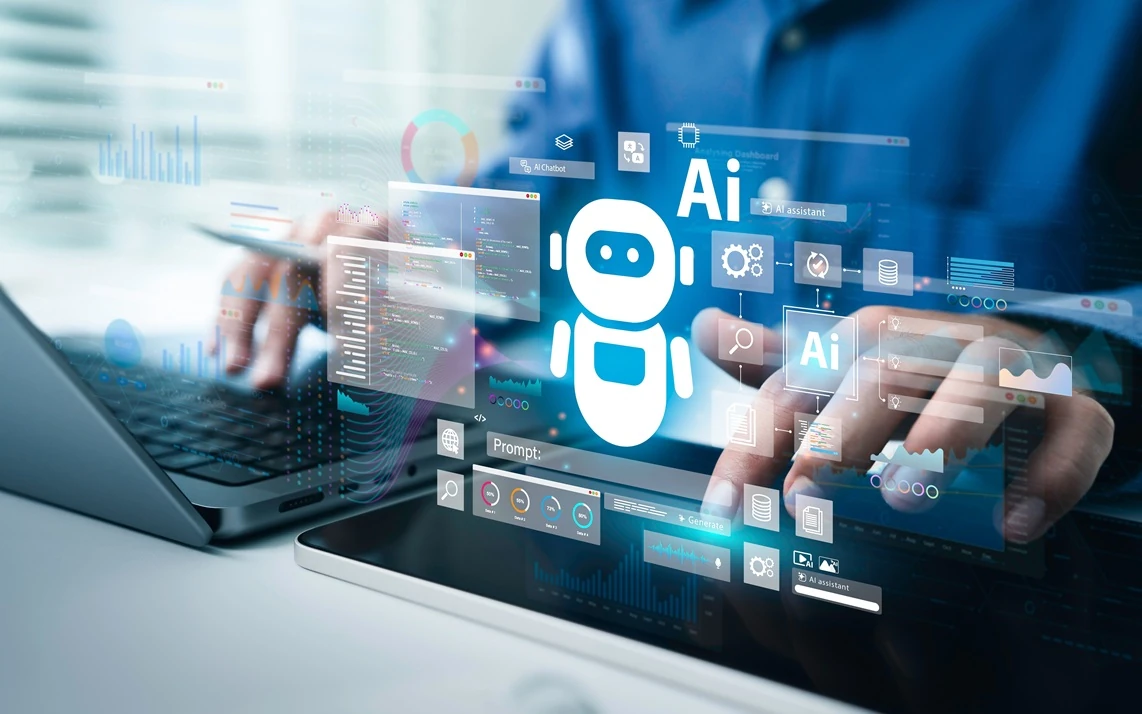
Small businesses are usually resource challenged, both in terms of money and people. Hence they must work smart, not hard. Business automation AI provides solutions that optimize time, limit the effects of human error and sharpen decision-making. Here’s why small businesses should consider AI:
1. Streamline Business Processes with AI
AI can handle repetitive tasks such as data entry, invoicing, customer support, and more. Automating these processes frees up time for employees to focus on higher-level tasks that require creativity and problem-solving skills.
2. Improve Customer Experience
Small business gets ahead of the curve with AI Automation solutions like chatbots and automated email responses, so they can provide 24/7 customer service experience, tailor communication specific to a customers needs and receive faster resolutions. This is a level of support that makes customers happy while creating customer loyalty.
3. Save Costs on Labor
AI can handle repetitive tasks instead of people, reducing the need for human intervention and cutting labor costs. AI-driven solutions can operate 24/7 without breaks, augmenting efficiencies without extra expenditure on payroll.
4. Make Data-Driven Decisions
AI can process massive volumes of data instantaneously and enable small businesses to make better decisions based on meaningful information. With the help of AI, companies can track trends predict product selection patterns/customer behavior and maximize their operations to stay ahead in the race.
Top AI Tools for Small Business Automation
AI tools come in all shapes and sizes. Depending on the needs of your business, you can implement automation solutions to streamline different aspects of your operations. Here are some of the best AI tools for small business automation:
1. AI for Invoicing and Payments Automation
How Much Does It Cost AI-enabled invoicing software tools like QuickBooks and Zoho Books automate creation of invoices, tracking payments and accounting & Pfizer Inc. These types of tools leverage machine learning algorithms to automatically categorize expenses, anticipate forecast future cash flow and guarantee invoices are never late.
2. AI for Marketing Automation
AI platforms such as HubSpot or Mailchimp provide small businesses with marketing automation, including automating email campaigns, managing social media and segmentation of audiences. AI can study customers behavior so that businesses can deliver personalized emails, optimize their advertising investments and boost the conversion rates.
3. AI for Customer Support
By using AI chatbots, such as Drift and Intercom, businesses offer human responses to customer questions in real time. These AI bots make life easier by being able to answer common queries, book appointments and even guide more complex issues to human agents – all with greater efficiency and customer satisfaction.
4. AI for Sales Automation
Tools powered by A.I. like Salesforce and PandaDoc are enabling businesses to automate sales from lead generation through contract management. Using artificial intelligence, these platforms monitor customer interactions to anticipate sales opportunities and suggest the most effective actions for sales teams.
How to Implement AI Automation in Your Small Business
Using AI for automation doesn’t have to be complex. Here’s a step-by-step process to help you incorporate AI into your small business:
Step 1: Identify Repetitive Tasks
Take a look at the sort of work you are currently doing and consider the tasks which take up time because they have to be performed over and over. This could be any number of tasks (e.g., entering data manually, keeping inventory, answering customer questions).
Step 2: Choose the Right AI Tool
Choose an AI solution that you need for your business. For instance, if you want to automate marketing, an AI-based tool like HubSpot would be great. If you’re in customer support, that might look like a chatbot solution such as Intercom.
Step 3: Set Clear Goals
Before you even get started says clarify what you want to achieve before implementing AI. Whether you’re saving time, reducing cost or enhancing customer satisfaction, know in advance what your goals are so that you can measure the return on your AI investment.
Step 4: Train Your Team
Train your team to use AI tools. Though much of the AI platform is easy to use, there will still be a learning period for your employees in how to wield the tools effectively.
Step 5: Monitor and Optimize
AI is not a “set it and forget it” tool. Keep a close eye on how your AI tools are performing, and remain vigilant, making necessary changes as required. Artificial intelligence such systems learn over time, so they will become more accurate and efficient with continued use.
The Future of AI in Small Business Automation

As tech continues to innovate, small business AI for automation will as well. And sophisticated AI tools that provide predictive analytics, give us a better window into customer behavior and are even more personalized. Small businesses that embrace AI will have a significant advantage, as they will be able to operate more efficiently and effectively than ever before.
AI is no longer the exclusive province of big companies. Small businesses have the ability, with the appropriate tools and techniques, to tap into AI’s incredible potential in order to operate more efficiently and cost-effectively while seeing a significant boost in customer service.
Embrace AI for Your Business Growth
Integrating AI into your small business operations can bring numerous benefits, from saving time and reducing costs to enhancing customer satisfaction and improving decision making. Whether you’re looking to automate invoicing, marketing, or customer support, there is an AI tool that can help. By embracing AI, your business can stay competitive in an ever-evolving digital landscape.